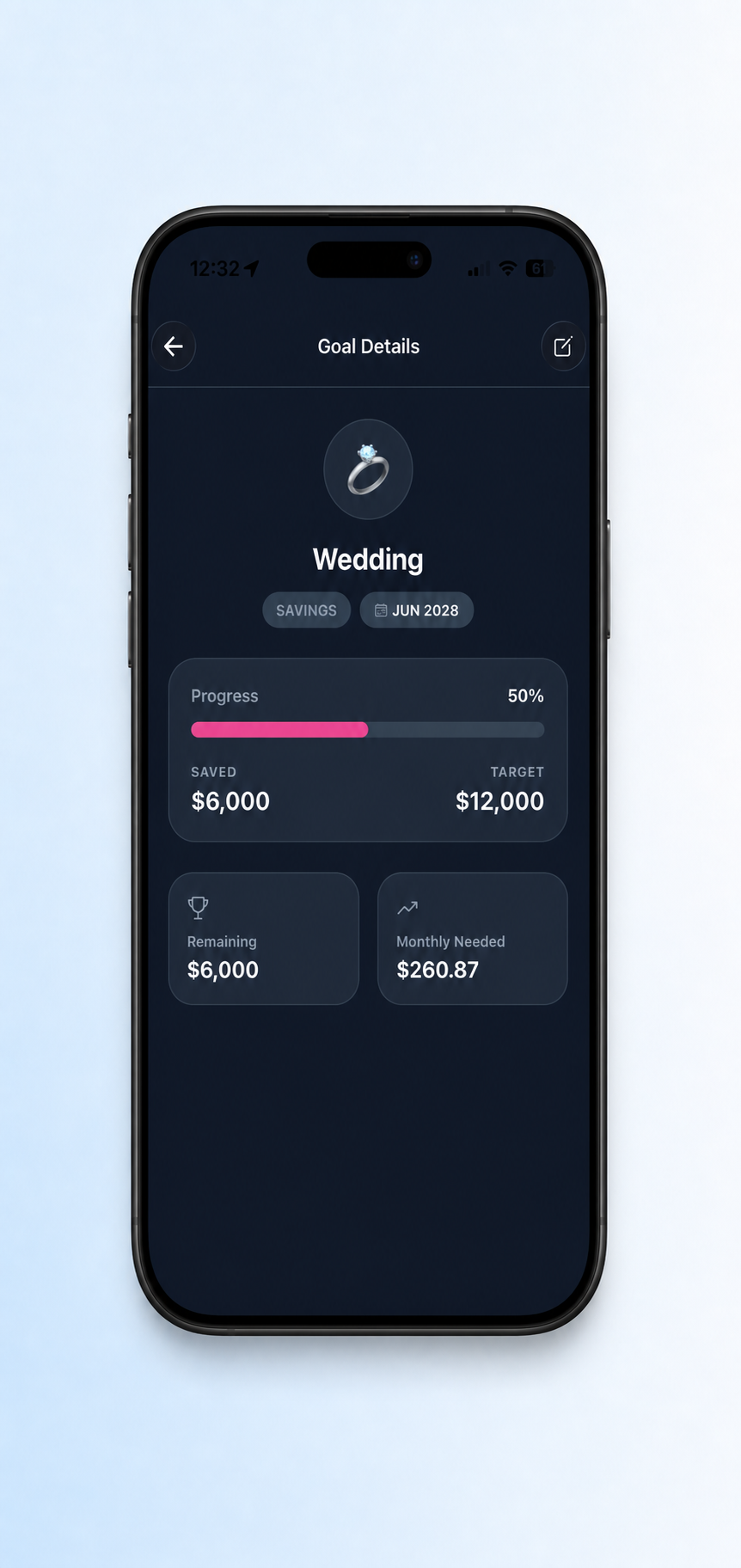
A wedding budget works best when it protects two things at once: the celebration you want and the financial life you will return to afterward. The goal is not to spend as little as possible. It is to make deliberate tradeoffs before deposits and deadlines begin making them for you.
1. Set the maximum before choosing vendors
Start with the most you can comfortably spend—not an industry average or a venue package. Add only money that is genuinely available: current wedding savings, contributions that have been clearly offered, and an amount you can save before the final payment date.
Keep your emergency fund, rent or mortgage money, debt payments, and other near-term goals outside the wedding total. If paying for the wedding would require carrying a credit-card balance, reduce the plan before signing contracts. Interest turns a one-day expense into a much longer commitment.
2. Calculate the monthly wedding savings target
Subtract confirmed contributions and money already saved from your maximum budget. Then divide what remains by the number of months until your last major payment is due—not necessarily the wedding date.
Monthly savings target = (maximum budget − confirmed contributions − current savings) ÷ months available
For example, imagine a $24,000 maximum, $6,000 of confirmed family contributions, and $3,000 already saved. With 15 months until the final payment, the remaining $15,000 requires $1,000 per month.
If that monthly figure does not fit alongside your normal budget, adjust one of the variables now: lower the total, extend the timeline, reduce the guest count, or change the shape of the event. Our savings goal calculator can help you test the timeline.
3. Build a wedding budget by category
Every wedding is different, so percentages are planning prompts rather than rules. Create categories that match the event you are actually organizing, then request real quotes in your location.
- Venue, food, and drinks: site fees, catering, bar service, rentals, gratuities, and taxes
- Photography and video: coverage, additional hours, albums, travel, and delivery fees
- Clothing and beauty: outfits, alterations, accessories, hair, makeup, and grooming
- Music and entertainment: DJ or band, ceremony audio, special performers, and licensing
- Flowers and decor: bouquets, ceremony pieces, table decor, signage, delivery, and teardown
- Stationery: invitations, postage, menus, place cards, and thank-you notes
- Transport and accommodation: wedding-party transport, hotel rooms, parking, and shuttles
- Legal and ceremony costs: licence, officiant, rehearsal, and required documents
- Gifts and events: wedding-party gifts, welcome events, rehearsal dinner, and brunch
List taxes, service charges, delivery, setup, overtime, and tips explicitly. A quote that says “$5,000 plus tax and service” is not a $5,000 budget item.
4. Rank what matters before making cuts
Each partner should privately choose three priorities, then compare lists. You may agree that food and photography matter most, or discover that one person values a live band while the other cares more about having everyone there.
Spend confidently on shared priorities and simplify the rest. Common levers include the guest count, day of the week, season, meal format, bar options, floral scope, stationery, and number of separate events. Cutting a little from every category often creates a wedding neither person intended; cutting low-priority elements creates a clearer plan.
5. Create a payment calendar
The total budget alone will not tell you whether enough cash is available when a deposit is due. For every vendor, record:
- Contracted total and what it includes
- Deposit amount and due date
- Installment dates
- Final payment date
- Cancellation and refund terms
- Expected gratuity or day-of balance
Compare that calendar with your monthly savings schedule. If three large balances land in the same month, you may need to save earlier or negotiate a different installment plan.
6. Keep a contingency reserve
Hold back 5% to 10% of the budget for changes and forgotten costs. Do not assign the reserve to upgrades while core contracts are still unsettled. It can cover alterations, postage changes, guest-count shifts, weather backup plans, overtime, or a vendor replacement.
When the final bills are paid, any unused reserve can stay in savings or move to another shared goal.
7. Track the goal and the spending separately
A savings goal answers, “How much money have we set aside?” Expense categories answer, “Where is the wedding money going?” You need both views.
In Budgeteer, choose the Wedding goal template, set the target and timeline, and link the account holding the savings. As deposits are paid, record the transactions in clear wedding categories so you can compare actual spending with the plan. Budgeteer’s documented account, transaction, category-budget, and goal tracking keep the event connected to the rest of your monthly finances.
Review the plan together once a month and before signing any major contract. Reconcile recent payments, update quotes, check goal progress, and decide where any increase will come from before approving it. The monthly budget review checklist provides a simple routine.
A simple wedding budget checklist
- Agree on a maximum that does not use emergency savings or new debt
- Confirm contributions before including them
- Calculate the monthly savings amount using the payment timeline
- Collect complete quotes with taxes and service charges
- Choose three shared priorities
- Record every deposit, installment, and cancellation term
- Protect a 5% to 10% contingency reserve
- Review goal progress and actual spending monthly
Frequently asked questions
How much should I budget for a wedding?
Use the amount you can afford from current savings, confirmed contributions, and realistic monthly saving before payments are due. Local averages can help identify categories, but they should not set your personal maximum.
What is the fastest way to reduce a wedding budget?
Guest count often affects several costs at once, including food, drinks, rentals, stationery, transport, and venue requirements. Date, location, and event format can also have a large impact.
Should a honeymoon be part of the wedding budget?
Either approach works if it is explicit. Keeping the honeymoon as a separate savings goal makes it easier to see whether the ceremony and reception are consuming money intended for the trip.
How often should we update the wedding budget?
Review it monthly and whenever you receive a materially different quote, change the guest list, or consider a new contract. Update both future estimates and payments already made.
Keep the plan connected to real life
A good wedding budget is not a perfect spreadsheet created once. It is a living agreement about priorities, timing, and tradeoffs. Learn how to handle other irregular costs with the sinking funds guide, then keep daily spending current with our guide to tracking expenses.