The affordable car is not simply the one with a payment you can make this month. It is the one whose complete ownership cost fits alongside housing, food, savings, and every other priority for years.
Start with the job the car must do
List required passenger space, accessibility, cargo needs, climate, commute, parking, and expected annual distance. Separate requirements from preferences. This prevents a feature-filled model from quietly defining the budget.
Estimate the drive-away target
Add the negotiated vehicle price, sales taxes, registration, inspection, and unavoidable dealer or documentation fees in your area. Subtract only a conservative trade-in estimate. Include an initial repair allowance for a used vehicle and avoid draining the emergency fund to complete the purchase.
Compare total monthly ownership costs
Get insurance quotes before choosing a model. Estimate fuel or charging, parking, maintenance, tires, registration, and financing. A less expensive vehicle can cost more to insure or maintain; an efficient vehicle may cost more upfront but less to operate.
Monthly car cost = payment + insurance + energy + parking + maintenance reserve + recurring fees
Create the savings timeline
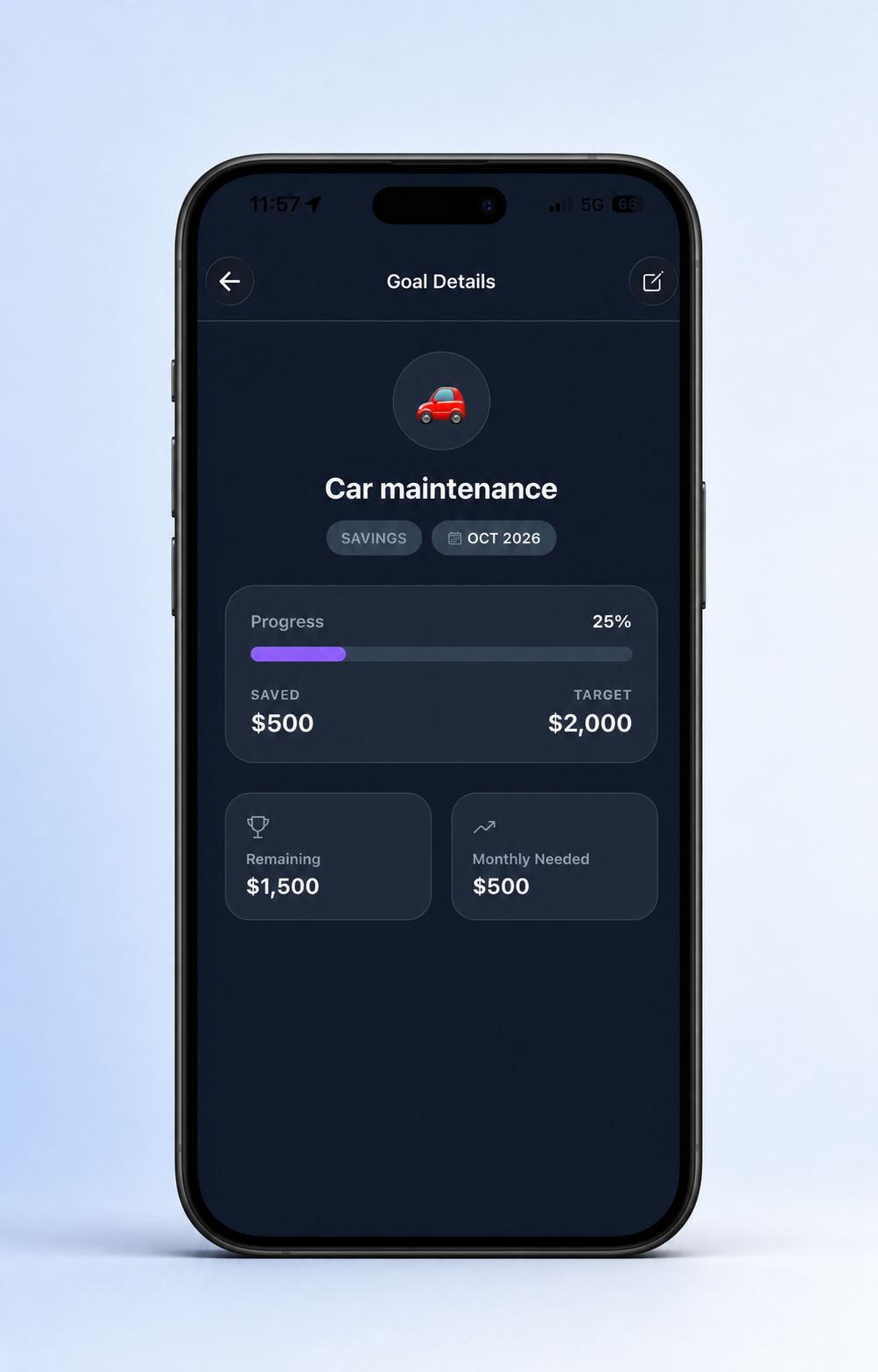
Subtract existing car savings and the expected sale or trade-in proceeds from the drive-away target. Divide the remainder by the months available. Create the Car goal in Budgeteer, link the savings account, and track each contribution. If you are borrowing, keep the down-payment goal distinct from the auto-loan payoff plan.
Test the future budget before buying
For several months, transfer the projected difference between your current transport cost and the new all-in car cost into savings. If the rest of the budget becomes too tight, revise the price or timing before signing. This rehearsal also adds to the down payment.
Inspect the deal, not only the monthly payment
Compare purchase price, interest rate, loan term, fees, add-ons, and total paid. A longer loan can make the payment look smaller while increasing interest and extending the risk of owing more than the car is worth.
Should I buy a car with cash?
Cash avoids loan interest but should not erase emergency savings or money needed for near-term obligations. Compare the complete impact of paying cash and financing.
How much should I reserve for repairs?
Use the vehicle’s age, condition, service history, warranty, and local repair costs. Start with known upcoming maintenance from a pre-purchase inspection.